Clients book MedWave Contour for the following reasons:
Yes. The wavelengths used in MedWave Contour, 635nm, are FDA-cleared for increasing circulation, reducing pain and inflammation as well as weight loss and cosmetic skin treatment.
Red light therapy has no UV, so it won’t damage skin or tan you. It’s non-invasive and drug-free. We provide eye goggles because the LEDs are bright.
You should not use Red Light Therapy if you are pregnant, have active cancer, have epilepsy triggered by light, take photosensitizing meds like tetracycline, or have a history of light-induced headaches. For everyone else, it’s considered very low risk.
Launch phase: 2x per week for 4 weeks. This loads your cells and kicks off collagen and inch loss.
Results phase: 2-3x per week for 4-8 weeks. This is where most before/after changes happen.
Maintenance: 1x per week or 4x per month. This keeps collagen up, inflammation down, and results locked in.
Drink 2L water on treatment days. Light + hydration = better lymphatic flushing for inch loss. Light exercise after your session helps too.
Your first visit:
Every cell in your body has tiny batteries called mitochondria. When you’re stressed, injured, or aging, those batteries run low. That’s when you get inflammation, slow healing, and tired-looking skin.
Red light therapy fixes that by feeding your mitochondria. Specific wavelengths of red light, 635nm, get absorbed by your mitochondria like a phone on a charger.
Once charged, your cells make more ATP. That’s your body’s energy currency. With more ATP, your cells can:
Red light therapy isn’t hype — it’s one of the most studied wellness treatments out there. Over 1,000 peer-reviewed studies and 5,000+ lab trials have tested it. NASA even used it in the 90s to help astronauts heal wounds faster in space.
Here’s what the research shows:
A 2014 study in _Photomedicine and Laser Surgery_ found that red light at 633nm boosted collagen and elastin production. After 12 weeks of treatment, participants had visibly smoother skin and fewer wrinkles. Dermatologists also use it for acne because it calms inflammation and helps kill acne bacteria without drying out your skin.
Multiple clinical trials show red light reduces joint pain and stiffness in arthritis. Athletes use it because it cuts down delayed onset muscle soreness — that “can’t-walk-down-stairs” feeling after leg day. A 2016 meta-analysis confirmed it speeds up muscle recovery and reduces inflammation markers after exercise.
Red light therapy is FDA-cleared to treat hereditary hair loss. A 2014 trial showed a 35% increase in hair growth after 26 weeks of consistent use. It works by waking up dormant hair follicles and increasing blood flow to the scalp.
Results are not overnight. Most studies show real changes take 8 to 12 weeks of consistent use, about 2 to 3 sessions per week. It’s cumulative — like going to the gym. One session feels good, but the magic happens when you stick with it.
Red light therapy is basically charging your cells with light. That is why it is also called photobiomodulation. Think of photosynthesis for your skin. Plants use sunlight to make energy. Your cells use specific red and near-infrared light to make more energy so they can repair and perform better.
It’s not a UV tanning bed and it doesn’t give off heat like an infrared sauna. There’s no damage to your skin. The light just sinks in and tells your cells to wake up and get to work.
That’s why you’re seeing it everywhere — from pro athletes using it for muscle recovery, to dermatologists using it for acne and wrinkles, to biohackers using it for sleep. It’s what’s happening under the skin that matters.
Red light therapy works, but only when you do it right. Most people who say “it did nothing for me” made one of these 4 mistakes:
Not all red light is therapy light. That red LED strip from your bedroom or a cheap party light won’t cut it. Therapeutic red light sits between 630-660nm. Near-infrared sits between 810-850nm. If the device doesn’t list the exact nanometers, it’s probably too weak to do anything. It’s like trying to charge your phone with a potato.
Light follows the “inverse square law.” Double your distance from the panel, and you get 4x less power. Standing 1 meter away for 2 minutes won’t do much. Clinical studies use 6-12 inches away for 10-20 minutes per area. Underdosing = no results. Overdosing = wasted time. You need the sweet spot.
Red light therapy is a biological process, not Instagram filler. You wouldn’t expect six-pack abs after one gym session. Collagen takes 8-12 weeks to rebuild. Hair follicles take months to wake up. If you quit after 3 sessions because your wrinkles didn’t vanish, you stopped before the science could kick in.
Irradiance is the word you need to know. It’s measured in mW/cm² and it tells you how strong the light is. Cheap masks and wands often deliver under 10 mW/cm². That means you’d need to sit there for an hour to get what a good device does in 10 minutes. Most people don’t, so they see zero change.
Red light therapy fails when the dose is wrong. Get the right wavelength, get close enough, stay consistent, and use a device with real power.
Results vary depending on consistency, hydration, and lifestyle.
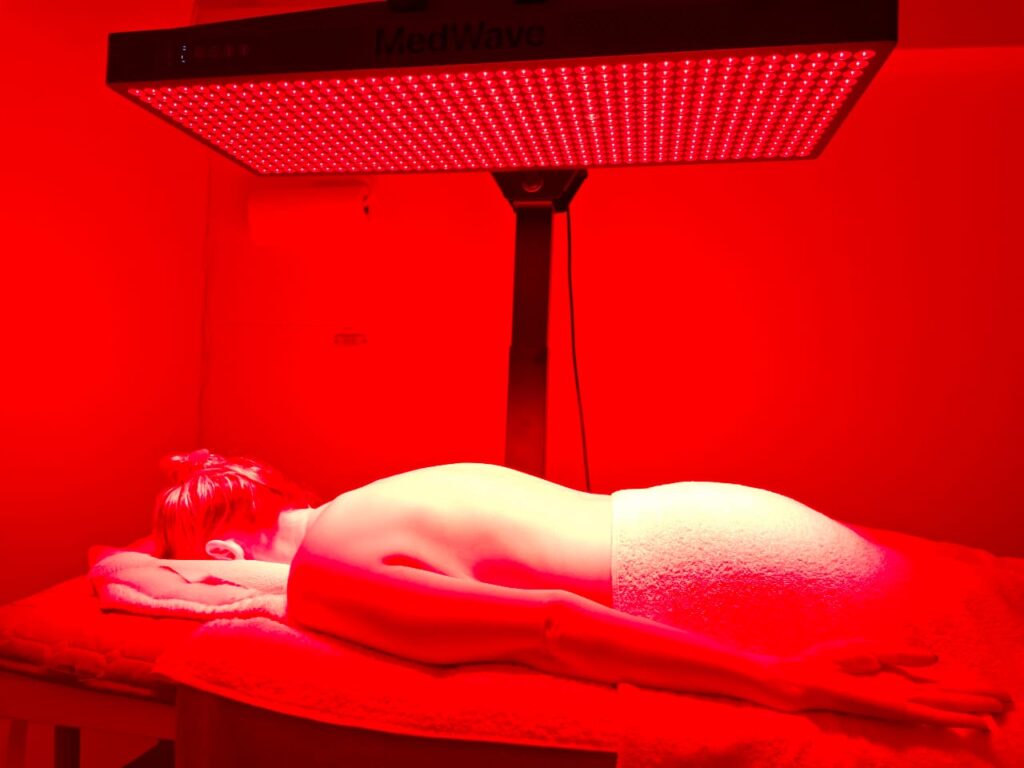
The Glenwood Hub
191 Bulwer Rd, Glenwood, Durban